
How to Care for Pearls: Keep Your Lustre
The one habit that will protect your pearls more than anything else is deceptively simple: put them on last, take them off first.
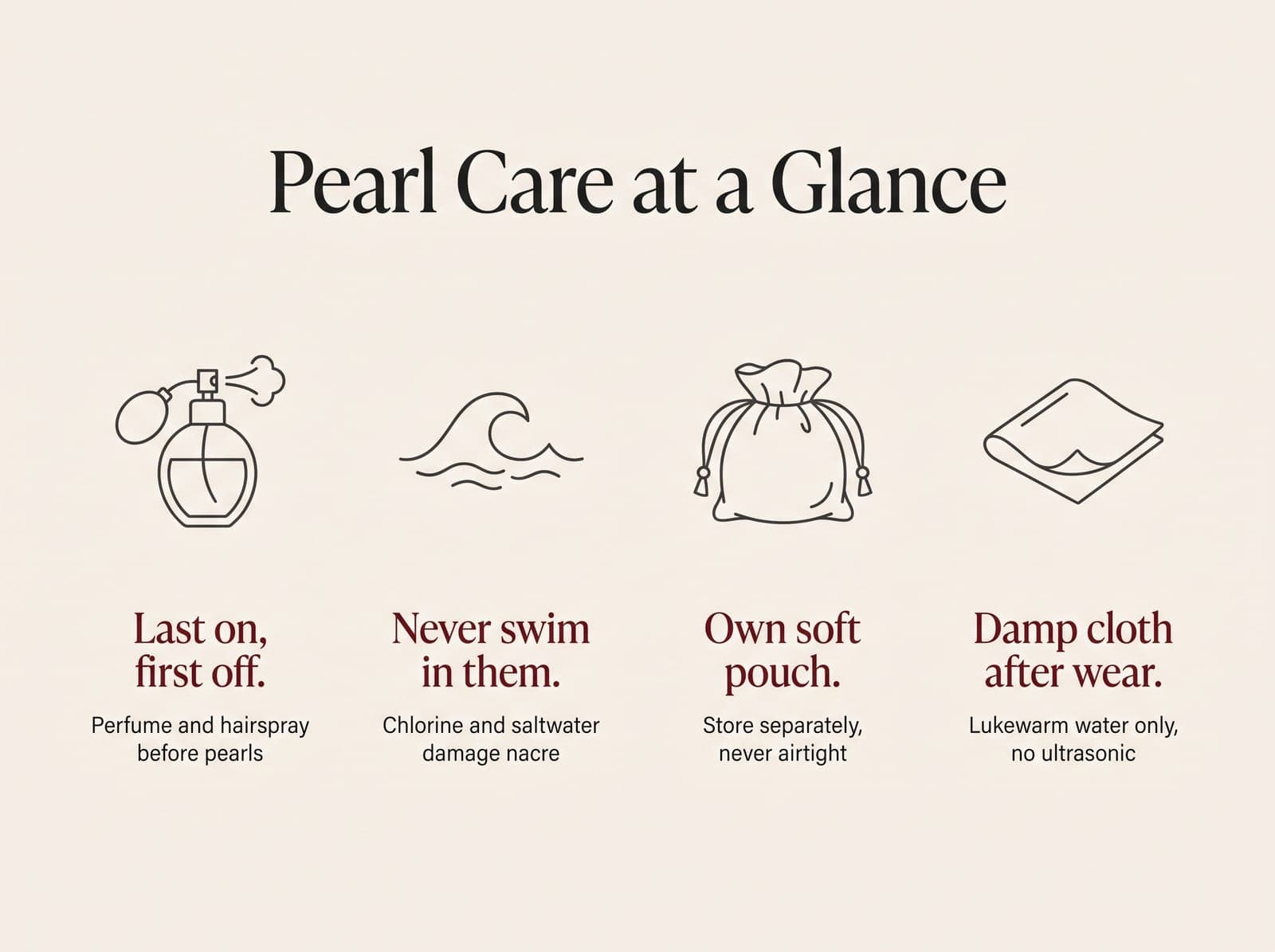
Think of it this way. Pearls are made of nacre, a living layer of mother-of-pearl that is softer and gentler than any gemstone. When you get dressed, perfume, hairspray, and cosmetics land on your skin first. The last thing you do, after you are fully ready, is fasten your pearl earrings or clasp your necklace. When you come home, the first thing you do is take them off, before you shower, before you apply your nighttime routine, before you handle anything else. Put them on last. Take them off first.
That single rule stops the majority of accidental damage. Everything else in this guide builds from there.
The other rule I always give customers is storage: keep pearls in their own velvet pouch, away from other jewellery. Pearls are delicate gemstones. They can be scratched easily by metal, diamond, moissanite, or even a rough jewellery box edge. Treat them softly, and they will reward you.
At a glance: what damages pearls
| Threat | What it does | What to do instead |
|---|---|---|
| Perfume, hairspray, cosmetics | Coats nacre with acid residue; breaks down the protein matrix; dulls lustre | Apply everything first, then fasten your pearls (last-on, first-off) |
| Chlorine or saltwater immersion | Eats the nacre layer; causes pitting and permanent clouding | Take pearls off before showering, swimming, or going to the beach |
| Storing with harder jewellery | Scratches the nacre surface; creates micro-damage that spreads | Keep pearls in their own velvet pouch; store separately from rings or anything gemstone-set |
| Dry storage (airtight, closed boxes, safes without humidity) | Nacre dries out; the protein contracts and cracks; lustre fades | Store in a soft pouch or cloth, breathable, in a drawer or cupboard at room temperature |
| Harsh cleaning (toothbrush, ultrasonic, steam) | Scours the nacre; loosens the keratin layer; opens the pearl to damage | Wipe gently with a soft, damp cloth only; or soak in lukewarm water and mild soap |
Why pearls are different: nacre, not just a stone
This matters because it changes how you think about pearl care.
A diamond or moissanite is a single crystal: hard, stable, chemically inert. You can clean it with ultrasound, soak it in acid, polish it with abrasives. It will not change. Pearls are not like that.
A pearl is organic. It is made of nacre, a composite material built by an oyster or mussel layer by layer over years. Nacre is aragonite, a form of calcium carbonate, bound together with conchiolin, a protein. That protein is what gives nacre its lustre, its depth, its gentle glow. It is also what makes pearls vulnerable. Acids attack the protein. Moisture imbalances crack it. Abrasion scours it away.
This is not a weakness; it is beauty. The very thing that makes a pearl soft and glowing is also what asks you to handle it gently. It is why pearls feel different on your skin. It is why they pass down better than you might expect, if you know how to care for them.
The last-on, first-off rule in depth
I mentioned this at the start because it is your single best guard.
Your morning routine: shower, skincare, sunscreen, then makeup, then perfume or cologne, then hairspray. Only after all of that, when you are fully dressed and ready, do you put on your pearls. The reason is simple. Perfume and hairspray contain alcohol. Cosmetics contain oils and sometimes weak acids. Sunscreen has silicones. All of these coat your skin. When they touch nacre, they break down the conchiolin protein that gives pearls their lustre. The damage is slow; you won't see it in a day. But over months and years, your pearls will lose their glow and look dull.
The same applies in reverse. When you come home, your pearls are the first thing you remove. Before you shower, before you wash your face, before you apply lotion or night cream. Off first. Then do everything else. This keeps the chemicals off your pearls.
The exceptions are rare. If you are showering, swimming, or going to the beach, take pearls off. Nacre hates saltwater, chlorine, and prolonged moisture. If you are at a formal dinner with wine service or heavy makeup touch-ups, you might consider a piece that is easier to care for. But for everyday life, last on and first off is the rule.
Perfume, hairspray, and cosmetics
You do not need to avoid perfume. You do not need to stop wearing makeup. You just need to apply everything before your pearls touch your skin.
This is where it gets practical. Hairspray is the biggest culprit because the spray lands on you in a wide mist. If you are wearing pearl earrings or a necklace already, the spray will coat them. So spray your hair, let it dry and settle, then fasten your pearls. If you use a lot of hairspray, wait a minute or two.
Perfume is safer if applied to your clothes or pulse points (wrists, neck) before you dress. If you apply it after you have your pearls on, spray it on your clothing or your wrist, not near your neck where your necklace sits.
Makeup is less of an issue because you apply it before pearls go on. But if you wear foundation or concealer on your neck (many of us do), let it set before putting on a necklace. The idea is the same: let everything dry and settle before pearls make contact.
Sunscreen is tricky. Most of us do not reapply sunscreen throughout the day, so the initial application before your pearls goes on should be fine. But if you reapply (which is good for your skin), take off your necklace first.
Cleaning your pearls after wear
Pearls collect a tiny amount of your skin oil and sweat every day you wear them. Over time, this builds up and dulls the lustre. The good news is that cleaning them is simple and gentle.
The standard method: after you take them off, wipe them gently with a soft, damp cloth. A microfibre cloth, a soft cotton cloth, or the pouch your pearls came in all work. Damp means lukewarm water only, no hot water. You are not cleaning them like dishes; you are just removing the day's buildup. That is enough.
If they need a deeper clean, soak them for a minute or two in lukewarm water with a tiny drop of mild dish soap or gentle jewellery soap. Think baby shampoo, not antibacterial hand soap. Stir the water gently, soak the pearls, then rinse them in fresh lukewarm water and pat them dry with a soft cloth.
Never use a toothbrush, even a soft one. Never use an ultrasonic cleaner. Never use steam or heat. Never soak them in vinegar or other acidic cleaning solutions. The common mistake I see is treating pearls like diamonds or other hard stones. They are not hard stones. Pearls are soft and delicate, and being too harsh with them is what causes most avoidable damage.
Dry them immediately with a soft cloth. If you leave them wet, moisture can work into the string or the drill hole (where the pearl is strung) and cause problems.
Storage: breathable, cool, separate
Where you store your pearls matters as much as how you care for them daily.
The rule sounds simple: store them somewhere dry, at room temperature, in a breathable container, away from other jewellery. Let me break down why each part is important.
Dry, room temperature. This means your bedroom drawer, a cupboard, or a small jewellery box. It does not mean a safe, a safety deposit box at the bank, or a chest in your attic that heats up in summer. Extremes of humidity or temperature make nacre expand and contract, which cracks the protein and fades lustre. A stable, mild environment is ideal.
Breathable. This is where many people get it wrong. They buy a beautiful sealed box or jewellery case and lock their pearls away. Do not do that. Sealed storage traps moisture. The nacre has nowhere to breathe. Over months or years in a sealed box, your pearls can crack inside. Instead, use a separate velvet pouch, a cloth sleeve, or a shallow drawer in your jewellery box where air can move around the pearls. Cotton, silk, velvet, or any natural cloth is better than plastic.
Separate from other jewellery. Pearls are soft. Diamonds, moissanite, sapphires, and even gold settings are harder. If your pearl studs sit next to a diamond ring, the diamond will scratch the pearl every time you move the box. Keep your pearls in their own pouch or their own section of your jewellery box. This also protects them from perfume or oils from other pieces.
If you wear your pearls regularly (most days), do not overthink storage. A soft cloth pouch on your bedside table or in your top drawer is fine. Pearls are heirlooms; they are meant to be worn and lived with. The damage from staying locked away is often greater than the risk of daily wear if you follow the last-on, first-off rule.
Special cases: restringing and necklaces
If you wear pearl necklaces often, you will eventually need to restring them. The silk thread that holds pearls together weakens over time from the stretch of daily wear, sweat, humidity changes, and the acids from your skin.
How often? A necklace worn several times a week will typically need restringing every 18 months to two years. If you wear it daily, every year. If you wear it occasionally, every two to three years. These are rough guides; the real signal is when the strand starts to feel loose or feels like it is stretching when you put it on.
When you do restring, use a jeweller who has experience with pearls. They will use silk thread (not nylon), knotted between each pearl so that if the thread breaks, you lose only one or two pearls, not the whole strand. They will also ensure the clasp is secure and properly sized.
It is not cheap. Restringing a necklace typically costs $40 to $80 NZD (or AU equivalent) depending on the number of pearls and the jeweller. But a well-made pearl necklace is worth restringing. It is an heirloom piece. The restringing is maintenance, like resoling a pair of good shoes.
New Zealand and Australian climate: humidity and salt air
If you live near the beach or in a humid climate, there are two things to watch.
Saltwater is the enemy. Never wear pearls while swimming or walking in the sea. If you live on the coast and enjoy salt spray, take them off before you head out. The combination of salt and moisture eats nacre fast. If saltwater does touch them by accident, rinse them immediately in fresh water.
Humidity. Coastal and subtropical areas have higher humidity. This is not a problem for stored pearls if they are in a breathable pouch; the air moves around them. But in very humid summers or if you live in a particularly damp house, be aware that moisture can affect the string. Use a breathable container, not sealed. If you notice the string feels clammy or damp, let your pearls air out for a few hours in a warm, dry room.
The good news: Australia and New Zealand's generally cool climates are actually kinder to pearls than hot, dry climates. Your main guards are the last-on-first-off rule and breathable storage.
Links to related guides
Before you buy, learn the difference between types. Akoya vs freshwater pearls covers lustre, durability, and price. And if you want to verify what you have is real, how to tell real vs fake pearls walks you through simple at-home checks.
If you are choosing a new piece, browse freshwater pearl necklaces for neckline styling or pearl earrings for everyday wear and gifting.
For moissanite jewellery in your collection, care is different. See the jewellery care guide for those pieces.
FAQ
Common questions
How often should I wear my pearls to keep the lustre fresh?
Wear them regularly, at least a few times a month, because the natural oils from your skin actually help keep the nacre supple and maintain its soft glow.
Can pearls get wet in the shower or bath?
Not ideal, though fresh water in small amounts is fine for a quick rinse if saltwater touches them; prolonged soaking in the shower or bathtub lets moisture seep into the drill hole and weaken the silk string. Remove them before you shower.
My pearl necklace feels tight or stretched. Is it broken?
Not necessarily, because silk thread naturally stretches from daily wear and humidity changes; if the strand still feels secure and the clasp works fine, it simply needs restringing. If it feels genuinely loose or you see gaps between pearls, do not wear it until restrung; you risk losing a pearl.
Should I ever have my pearls professionally cleaned?
If you follow the gentle-wipe rule, professional cleaning is rarely needed, though if your necklace is very old or you suspect stubborn buildup, a pearl-experienced jeweller can perform a gentle clean without abrasives or heat.
Do I need to wear specific jewellery bags or cases for storage?
No; a soft cotton pouch, a silk bag, or even a soft cloth tucked in a drawer works fine, as long as storage remains breathable and stays separate from other jewellery.
The heirloom mindset
Pearl care is not complicated. It is just a few simple habits, all rooted in respect for what a pearl is: an organic, gentle, living thing that was years in the making.
Wear your pearls. Let them touch your skin. Pass them down. They will glow more softly than a diamond, but they will glow for generations if you treat them gently. Last on. First off. That is the habit that matters. Everything else follows from there.